
Mercator Lectures for AI in the Human Context
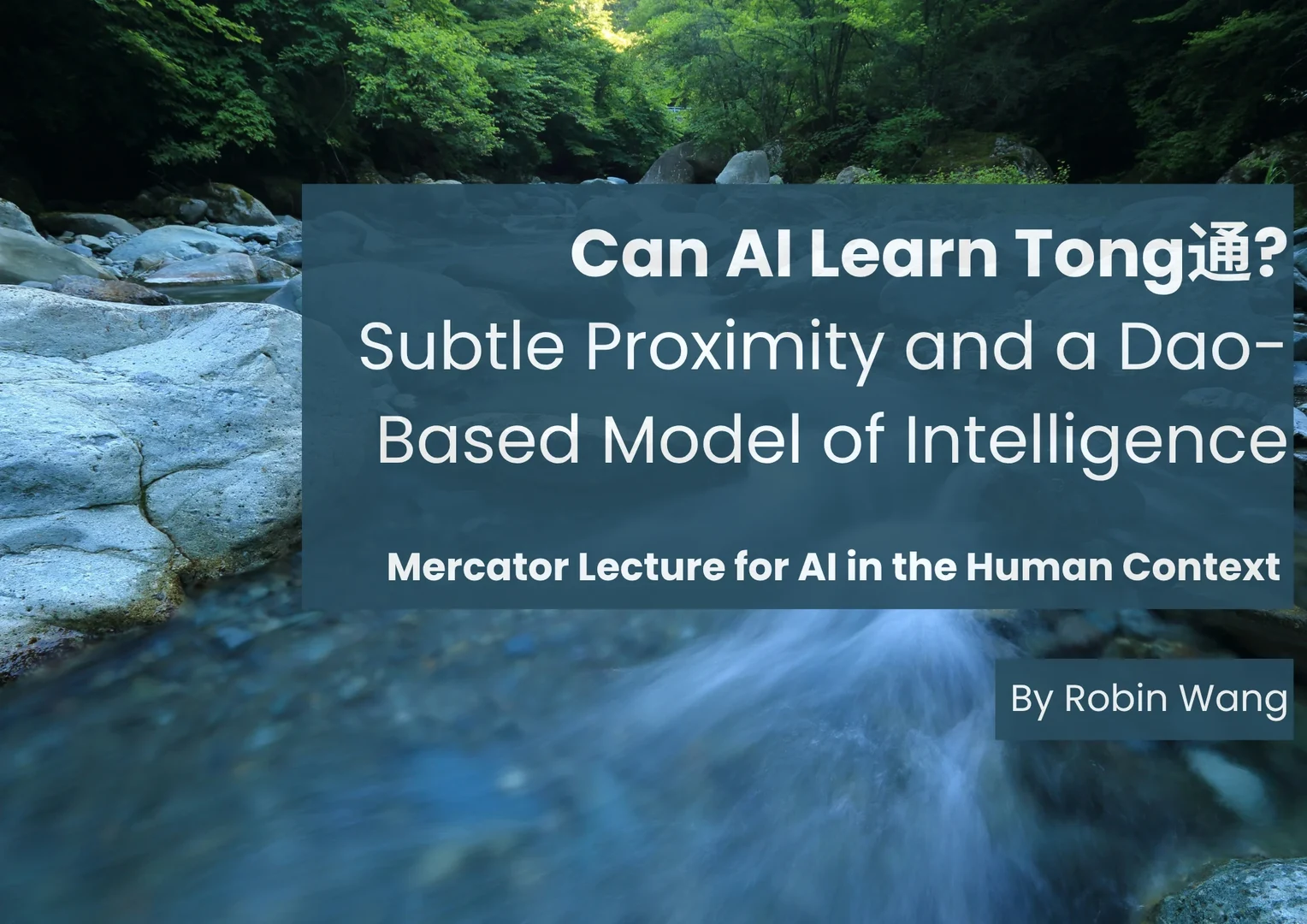
Prof. Robin R. Wang
This talk introduces the Dui–Tong Problem—the divergence between correctness (對dui) and relational responsiveness (通tong). Drawing on the Zhuangzi, it develops Subtle Proximity as a Dao-based logic of continual relational repositioning for navigating this tension. The framework is articulated through five theses and five Daoist epistemic virtues, offering an alternative model of intelligence beyond prediction, calculation, and control.
Find more information here.
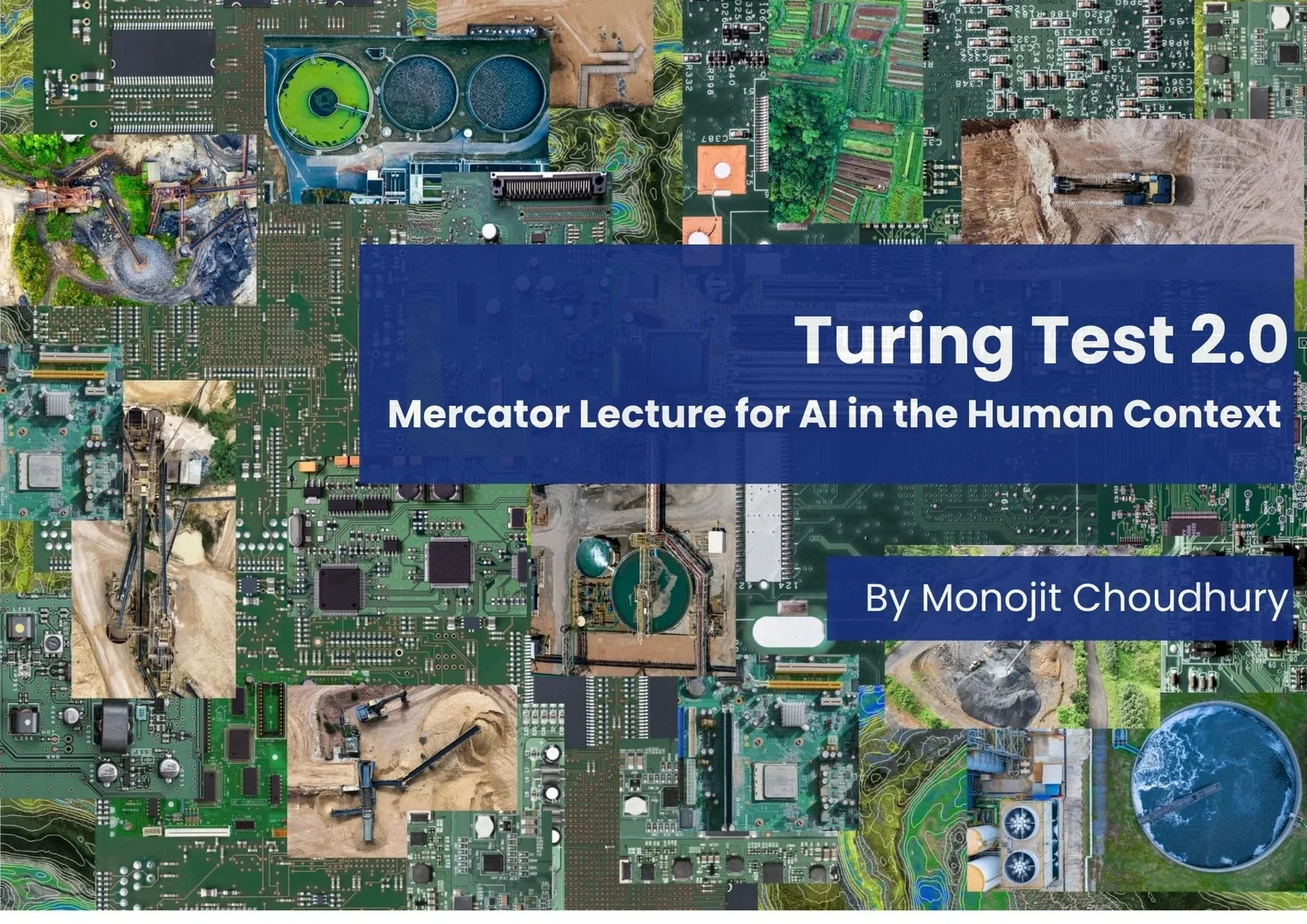
Prof. Monojit Choudhury
In this talk, Monojit Choudhury will argue that language is not a monolith but a living mosaic of individual voices, shaped by context, culture, and experience. To reduce it to a generic, averaged “human-like” performance is to miss its essence. He proposes a reframing, Turing Test 2.0, as the ability to model not an arbitrary human, but a specific individual. This shift echoes philosophical traditions that locate meaning in use, interaction, and lived reality. In doing so, it gestures toward a more ambitious and enduring vision: not merely to generate fluent text, but to engage with the human condition that language both reflects and constructs. Further he will argue that Turing Test 2.0 not only provides a theoretically grounded notion of generalization in machine learning, but also holds transformative potential for education, cognitive and psychological therapies, and social science research, among other domains.
Find more information here.

Prof. Neda Atanasoski
This talk examines seemingly opposed perspectives surrounding Artificial General Intelligence (AGI): its framing as a "New Manhattan Project" driven by geopolitical competition and fears of annihilation, and its reinterpretation by some as an expansion of the definition of life itself. The presentation argues that both narratives, despite their apparent opposition, are deeply intertwined with and perpetuate racial capitalist and colonial relations. By tracing the historical legacy of the original Manhattan Project, including land appropriation and environmental devastation, the talk reveals how existing infrastructures are being repurposed for AI development, exacerbating energy consumption and climate concerns. Ultimately, the talk suggests that the push for AGI, whether for global supremacy or a redefinition of life, obscures ongoing exploitation and reinforces existing power structures, underscoring the need for alternative understandings of life and living.
Find more information here.
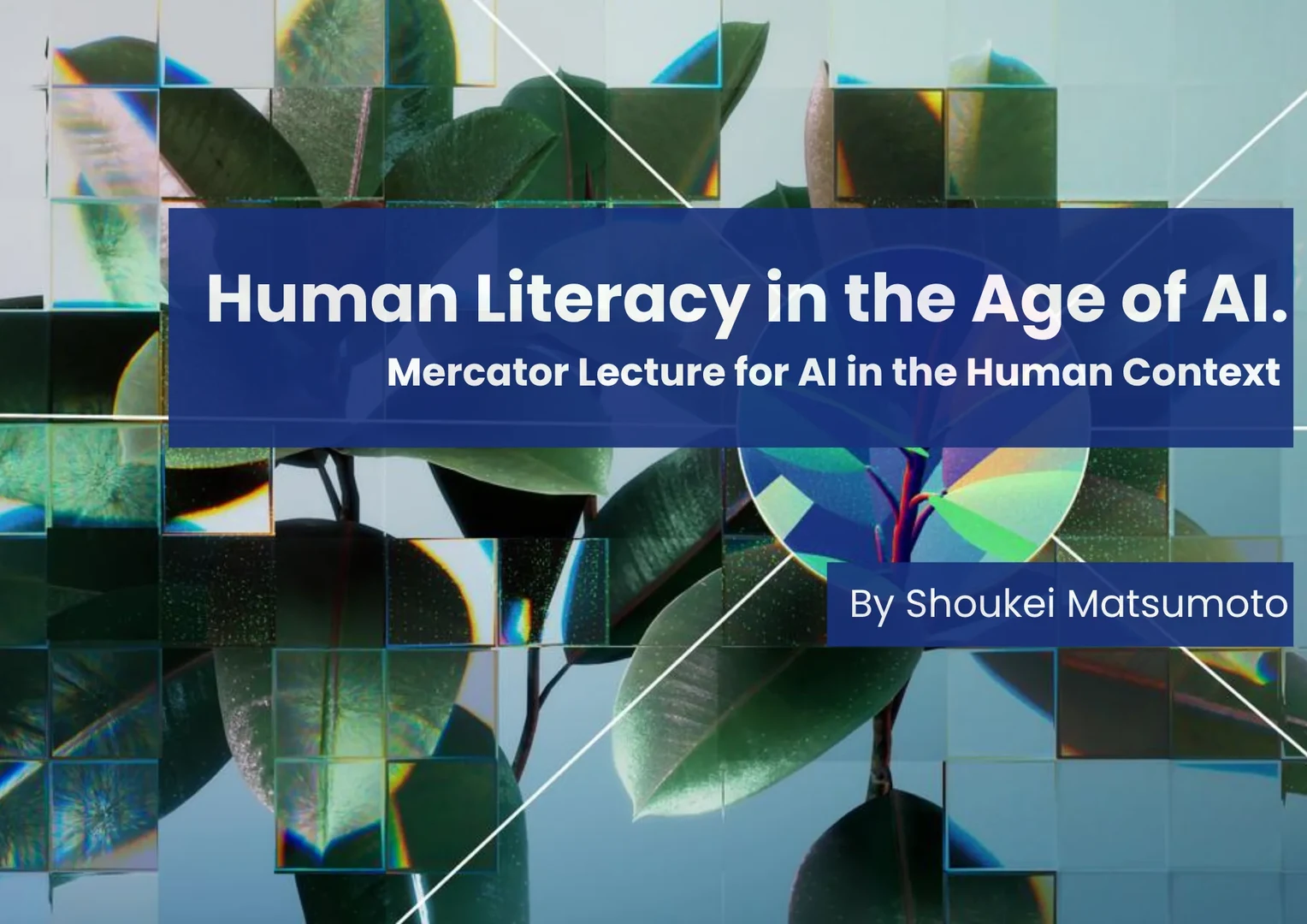
Shoukei Matsumoto
As artificial intelligence increasingly shapes human experiences and interactions, our conventional anthropocentric perspective faces profound challenges. This lecture explores how Buddhist philosophy, particularly its non-dualistic view of life and interconnectedness, offers valuable insights for transcending human-centered thinking. By engaging in a dialogue between Buddhism and posthumanist perspectives, we can cultivate a new kind of human literacy—one that embraces coexistence and interdependence with AI and the broader ecological system.
Find more information here.

Prof. Dr. Walther Ch. Zimmerli
Since Chat GPT we are witnessing another global AI hype. In his public Mercator-lecture Swiss philosopher Walther Ch. Zimmerli tries to unveil the hidden mechanism behind the undeniable success stories of AI by reconstructing its history of recurring hype cycles beginning with what he calls the „Dartmouth Conspiracy“ and Turing’s „rehabilitation of deception“. The underlying suggestive power of the idea of AI, however, must be attributed to its mythical character as is demonstrated both by contrasting the Gartner hype-cycle theory with the philosophy of myth (Blumenberg) and by semiotically explaining it in terms of analogies and metaphors as well as contrasting it with the Singularity- and the Posthumanism-Myth (Kurzweil).
Find more information here.

Prof. Dr. Maurizio Ferraris
Are We as consumers, as homo consumens qua homo valens, have become a source of a new kind of capital. Instead of being a sign of the divine election of the individual, as in the Calvinist origin of bourgeois capitalism, this new humanistic capital is only valuable insofar as it is shared among all humans, regardless of wealth, intelligence, race or faith. So far, the two options to regulate the environment in which this capital is produced have been either to privatize or to collectivize the data economy.
As part of his lecture, Prof. Dr. Maurizio Ferraris discusses a third humanistic option for a future data market that allows not only equality but true equity: Webfare as a redistribution of capital.
Find more information here.
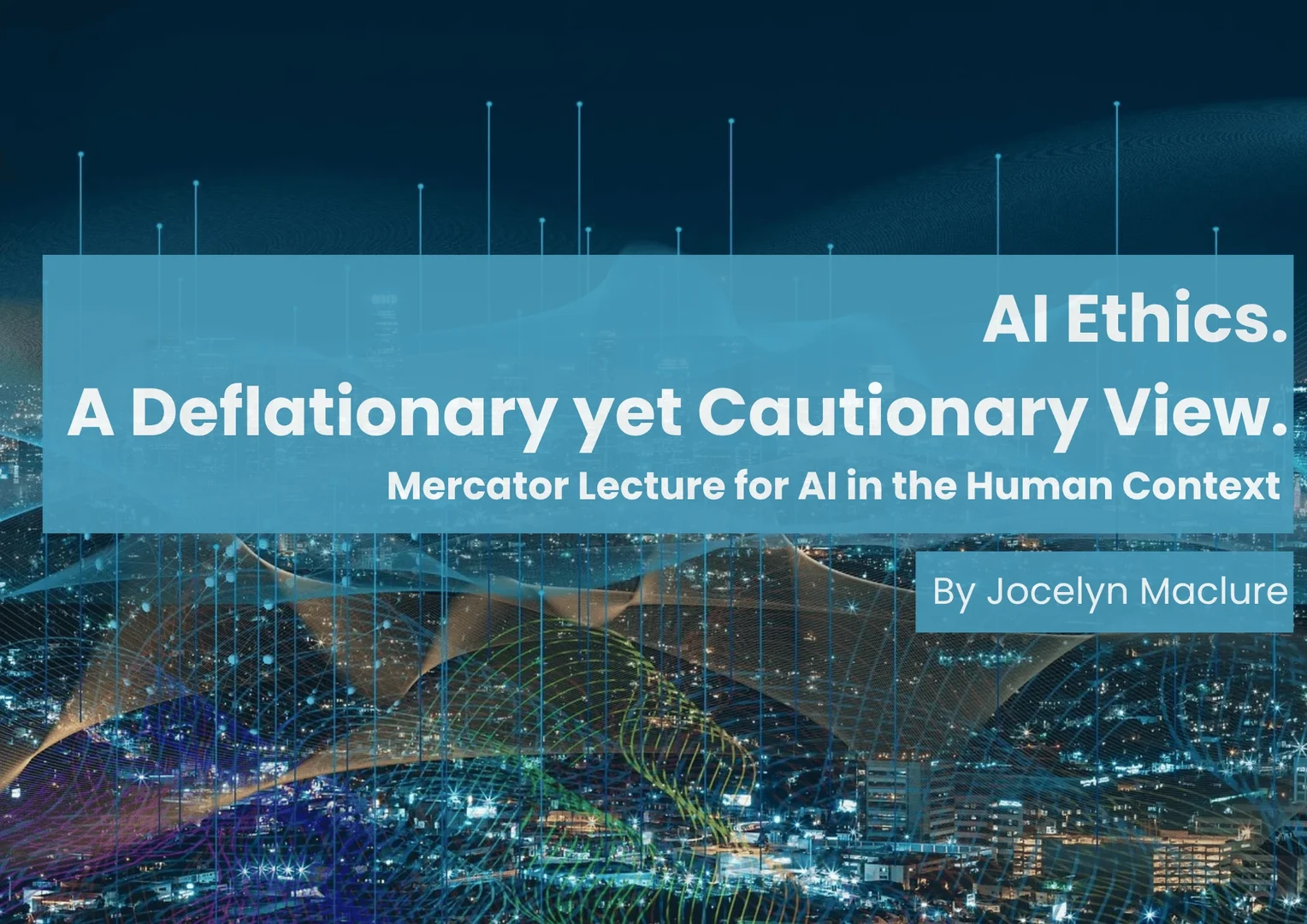
Prof. Dr. Jocelyn Maclure
Recent advances in AI research and development are raising a host of difficult ethical questions related to the impacts of AI technologies on human life. Although the project of building “moral machines” is not new, AI Ethics is now a vibrant field of research and public policy. One could hardly be blamed for being bewildered by the state of the public discussion on AI. Maclure defends what he calls a deflationary view about the future development of AI and the moral status of advanced AI systems. Maclures view is nonetheless cautionary because the narrow and limited machine learning algorithms that we currently have are already wreaking havoc in some crucial spheres of human life and disrupting established social practices; think, for instance, of generative AI such as ChatGPT. He shows that AI ethics, done properly, has the conceptual resources to help us move beyond the lofty realm of principles and contribute to the judicious regulation of AI technologies.
Find more information here.
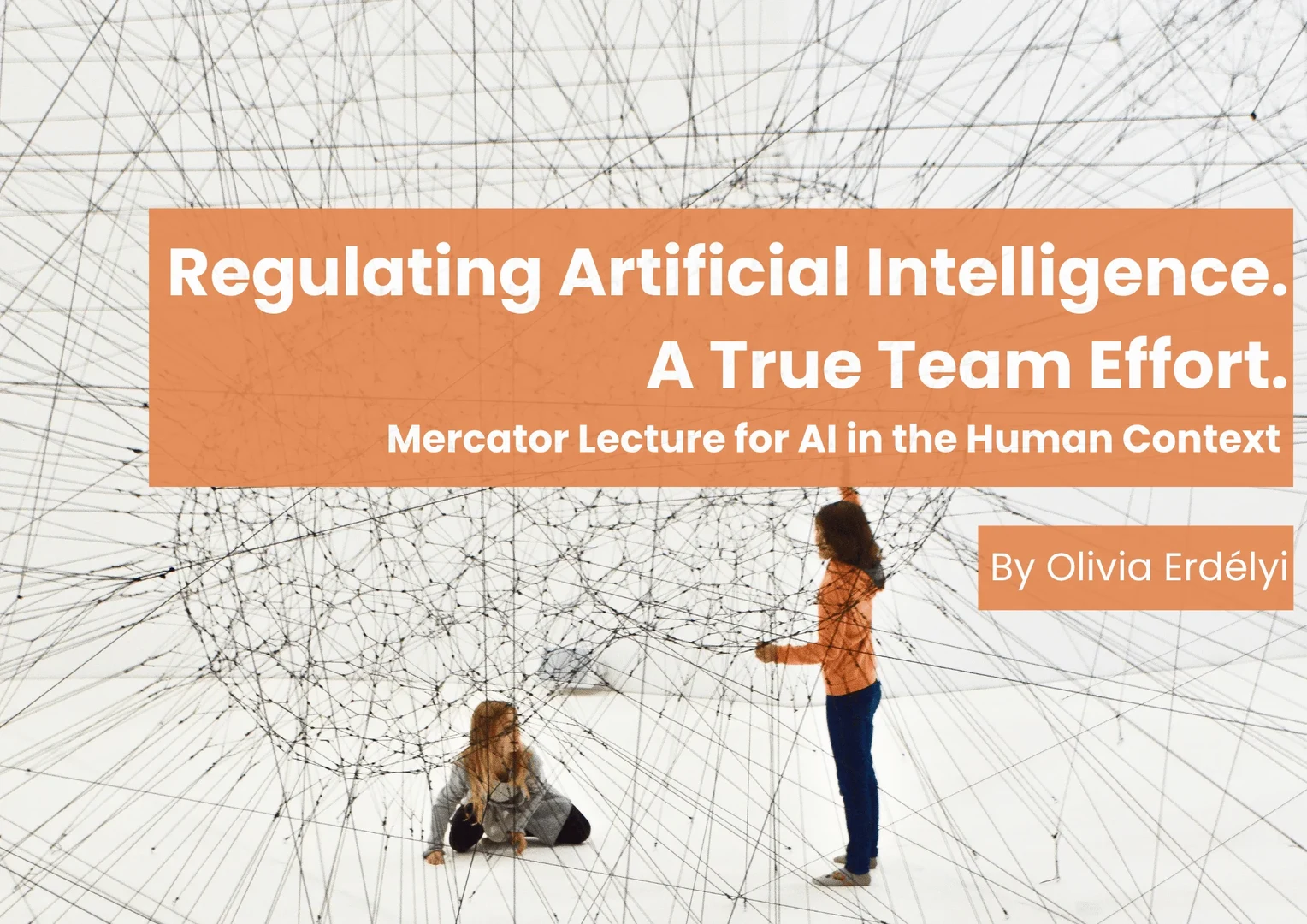
Prof. Dr. Olivia Erdélyi
Artificial intelligence increasingly determines our everyday life. In order to do justice to AI technologies and their regulation, it is necessary to look at legal, economic, social and anthropological contexts in equal measure. Dr. Olivia Erdélyi, in her talk on "Regulating Artificial Intelligence: A True Team Effort", addresses the question of the importance of interdisciplinary and multi-stakeholder cooperation in AI regulation. Her talk focuses on the following questions: which demands and desires clash in the development and implementation of AI regulation? How can communication between disciplines and between different stakeholders succeed? What is the role of international cooperation and transnational consistency? How straightforward is the practical implementation of AI regulatory requirements? In these and other questions, AI does not stand alone but is one of many examples in the history of technological innovation and its impact on our society. Only when AI technologies are understood as a nexus of different perspectives can we adequately address its challenges.
Find more information here.
Contact Information
To learn more visit our project website or follow us on twitter.
Projekt Coordination Bonn: Christiane Schäfer (c-schaefer@uni-bonn.de)
Project Office: Claas Lüttgens (c.luettgens@uni-bonn.de)