
Conference: Irrationality and the Age of AI: Language, Ethics, and the Future of Human Expression
2nd Desirable AI Conference at the University of Bonn
The AI revolution has accelerated in recent years, propelled by the widespread use of large language models (LLMs). Today, AI systems are not only transforming technical environments but also shaping our thoughts, emotions, and everyday linguistic practices. Increasingly, AI research and industry are shifting their attention from rational problem-solving toward aspects of human life once considered the last bastions of humanity. We can contrast this approach to AI as a simulation of ‘rationality’ with the expansion of applications into the realm of the expression of emotions and other aspects of human life often seen as ‘irrational’.
Our conference will explore the role of affective computing, emotionally laden human-machine interaction, conversational AI models, reinforcement algorithms, and recommender systems in the wake of the LLM revolution. In this light, we will discuss what we can learn about language—both in its explicit, logical, grammatical structure and in its emotional, expressive dimension—when AI accesses these depths of human expression. We also ask what it means for humanity when even the ‘irrational’ aspects of life are no longer beyond the reach of digitalization. This raises the important question of how emotions and their various forms of bodily and linguistic expression are related and what it means for AI to detect and mass reproduce patterns in human behavior that are closely correlated with the emotional depth dimension of human life.
We will address a paradox of technological progress: the deeper AI mirrors the structural layers of the human mind through interdisciplinary breakthroughs, the more actually existing human irrationality becomes visible as social and political collateral damage. Simulating this irrationality, in turn, provides AI with new behavioral data, generating a non-rational feedback loop alongside the rational one—bringing both novel opportunities and risks.
These developments have profound normative consequences for social, political, and ethical thought and action. They raise urgent questions about the design of ethical AI that goes beyond regulatory compliance. Addressing these questions requires us to account for the transcultural differences that shape AI as a sociotechnological phenomenon. To this end, the conference will convene interdisciplinary expertise, industry perspectives, practical approaches, policy insights, and fundamental reflections in AI politics, ethics and philosophy. Our discussions will highlight technical dimensions of AI, its impact on human experience, culture, and society, and the philosophical, ethical, and normative frameworks for shaping desirable futures.
For questions or further information, please contact: desirableai@gmail.com

Registration and Date
Time and Place
May 18-20, 2026
09:00 AM - 6:00 PM
Universitätsclub Bonn
Konviktstr. 9
53113 Bonn
Registration
Please register via email at desirableai@gmail.com and include your name, affiliation and the dates of conference days you wish to attend.
Schedule
9:00 - 9:30 Introduction and Welcome addresses
9:30 - 10:15 Talk by Prof. Markus Gabriel (Bonn)
10:30 - 12:30 Panel 1: Individual, Social, and Global Transformation.
- Panel Chair: Christiane Schäfer (Bonn).
- Samuel Hill (DFKI): Dynamic Trust in AI. Intersecting Social Structures, Interpersonal Dynamics, and Adaptive Design.
- Aisha Sobey (LCFI Cambridge): Creating Body Diversity in the Age of Generative AI.
- Sneha Nair (SOAS, London/Mumbai): When Care gets Coded.
- Chelsea Haramia (CST Bonn): Technosignatures as Pollution: Dominance, Irrationality, and Unsustainable Technology.
12:30 - 13:30 Lunch
13:30 - 15:00 Panel 2: Cognition, Models, and Meaning.
- Panel Chair: Victor Weisbrod (Bonn).
- Claudio Rossi (Alma Mater Europaea): Eight Arms, Zero Score. Octopus Cognition and the Anthropomorphic Limits of AI Evaluation.
- Ibiyinka Temilola Ayorinde (Ibadan) and Oluseyi Ayodeji Oyedeji (Northampton): Mitigating Hallucinations and Incoherent Reasoning in Large Language Models Using Neuro-Symbolic Knowledge Frameworks.
- Leonardo Santa Maria (Civic AI): Stochastic Parrots as World Makers.
15:15 - 15:45 AI Memory Box: Preserving Human Emotion in the Age of AI. Installation by Eslam El-Shamy and Mohamed W. Fareed (LO(C)AI).
16:00 - 17:30 Keynote: Emergent Emotions. The Future of Human-AI-Relationships. Keynote Lecture by Prof. Eva Weber-Guskar (Bochum).
19:00 Conference Dinner @ Eventmanufaktur
9:00 - 9:15 Intro
9:15 - 11:15 Panel 3: Between Connection and Alienation.
- Panel Chair: Anaïs Siebers (Bonn).
- Rosalie Waelen (IWE Bonn): Towards a Theory of Recognition from Artificial Others.
- Ferdinard Fosu-Blankson (Ghana): The Problem of Fading Identity and Human Dignity. Reincarnation and AI Replicas in the Age of Large Language Models.
- Alexandra Irimia (Bonn) and Jonathan Foster (Stockholm): Rule by Algorithm. A Bureaucratic Horror Story.
- Neely Myers (SMU): "Irrational" Intimacies: Youth and AI Companions.
11:30 - 12:30 KIP Panel Discussion: Toward the Realization of a Multilayered Society of Values.
- Moderated by Markus Gabriel (Bonn).
- Yasuo Deguchi (Program-Specific Professor, Institute for the Future of Human Society, Co-chairperson, Kyoto Institute of Philosophy).
- Jun Sawada (Executive Chairman, NTT, Inc., Co-chairperson, Kyoto Institute of Philosophy).
- Toshiaki Higashihara (Executive Chairman, Hitachi, Ltd., Director, Kyoto Institute of Philosophy).
12:30 - 13:30 Lunch
13:30 - 15:00 Panel 4: Artificial Expression in Aesthetic and Epistemic Practice.
- Panel Chair: Ana Ilievska (AU Beirut Mediterraneo/CST Bonn).
- Marvin Tritschler (Stuttgart): On Expressive Form.
- Nora Lindemann (Osnabrück): Should LLMs Testify? Situated Emotions, Performativity and AI-as-Witnesses.
- Eduardo de la Cruz Fernández (Universidad Politécnica de Madrid): The Algorithmic Muse and the Expert Eye. Empirical Evidence of a Perception Gap in the Reception of Synthetic Poetry.
15:15 - 15:45 The Body & the Archive: Towards a Sonic Speculation. Artistic Intervention by Mona Hedayati (Cambridge).
16:00 - 17:30 Keynote: Consciousness, Love, and the Fantasy of AI. Keynote Lecture by Prof. Alva Noë (Berkeley).
9:00 - 9:15 Intro
9:15 - 11:15 Panel 5: Rethinking Desirable AI from China: Philosophy, Discourse, Trust, and Sustainable Futures.
- Panel Chair: Robin Wang (Loyola Marymount).
- Zhang Shuangli (Fudan University): The Age of AI and the Efforts toward the Reconstruction of the Marxist Philosophy of Technology.
- Daniel Sarafinas (East China Normal University): AI as a Discursive Object in China. Key Narratives, Concerns, and Responses.
- Song Fei (University of Singapore): Trustworthy AI and Human-AI Trust in China. Current Progress and Possible Future Direction.
- Yan Junchi (Shanghai Jiao Tong University): AI advance in Research and Study in China. A Glance.
11:30 - 12:30 OryLab Presentation: Relation technology: a theory into how robotics can help fill an existing gap in the perception of oneself.
12:30 - 13:30 Lunch
13:30 - 15:00 Panel 6: Future of Emotion.
- Panel Chair: Apolline Taillandier (Cambridge).
- Tom Metcalf (IWE Bonn): Emotional-Conformity Machines. Large Language Models and the Suppression of “Outlaw Emotions”.
- M. Nicole Horsley (Ithaca): Illegible Feelings. How Emotional AI Reproduces Racialized Irrationality.
- Goda Klumbytė (Kassel): Understanding Beyond Reason. Feeling AI through Affective, Embodied, Material Interactions.
15:15 - 16:00 Voices That Don’t Train the Model: Kabiyè Knowledge and the Limits of AI (Carina Lange (DFKI), Seti Afanou, Morgan Clarke).
16:00 - 17:00 Outro
Desirable Digitalisation: Rethinking AI for Just and Sustainable Futures
Our research program is a collaboration between the Universities of Cambridge and Bonn and numerous international partners, and is funded by the Mercator Foundation in Germany.
We investigate how to design AI (artificial intelligence) and other digital technologies in a responsible way, placing the questions of social justice and environmental sustainability at the very heart of our work.
Contact und Organisation
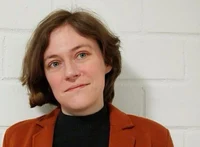
Christiane Schäfer
University of Bonn, Center for Science and Thought, Institute of Philosophy, Konrad-Zuse-Platz 1-3
53227 Bonn